87n1

Design-driven full-stack engineer building agentic AI infrastructure. I ship products to the App Store, and the systems that orchestrate the agents behind them.

Jeffrey Michael Johnson

AI Engineer & Agent Orchestration

Phoenix, AZ
Claude Code
Claude Design
MCP Protocol
CrewAI
LangChain
n8n
Pinecone
Vercel
Next.js
Supabase
React Native
TypeScript
GitHub Actions
AWS
Framer Motion
Three.js
iOS
Android
Obsidian
Ghostty
OpenClaw
Hermes
Figma
Lovable
Claude Code
Claude Design
MCP Protocol
CrewAI
LangChain
n8n
Pinecone
Vercel
Next.js
Supabase
React Native
TypeScript
GitHub Actions
AWS
Framer Motion
Three.js
iOS
Android
Obsidian
Ghostty
OpenClaw
Hermes
Figma
Lovable
MCP Builder
7Public Repos
22Private Repos
9Skills published (23 authored)
6AWS Training
Currently Building

What I'm building right now

Building and shipping non-stop. 8 projects moving toward release right now — here is where each one stands and where it is headed.

Currently Building

GBuild

Build anything. Smarter.

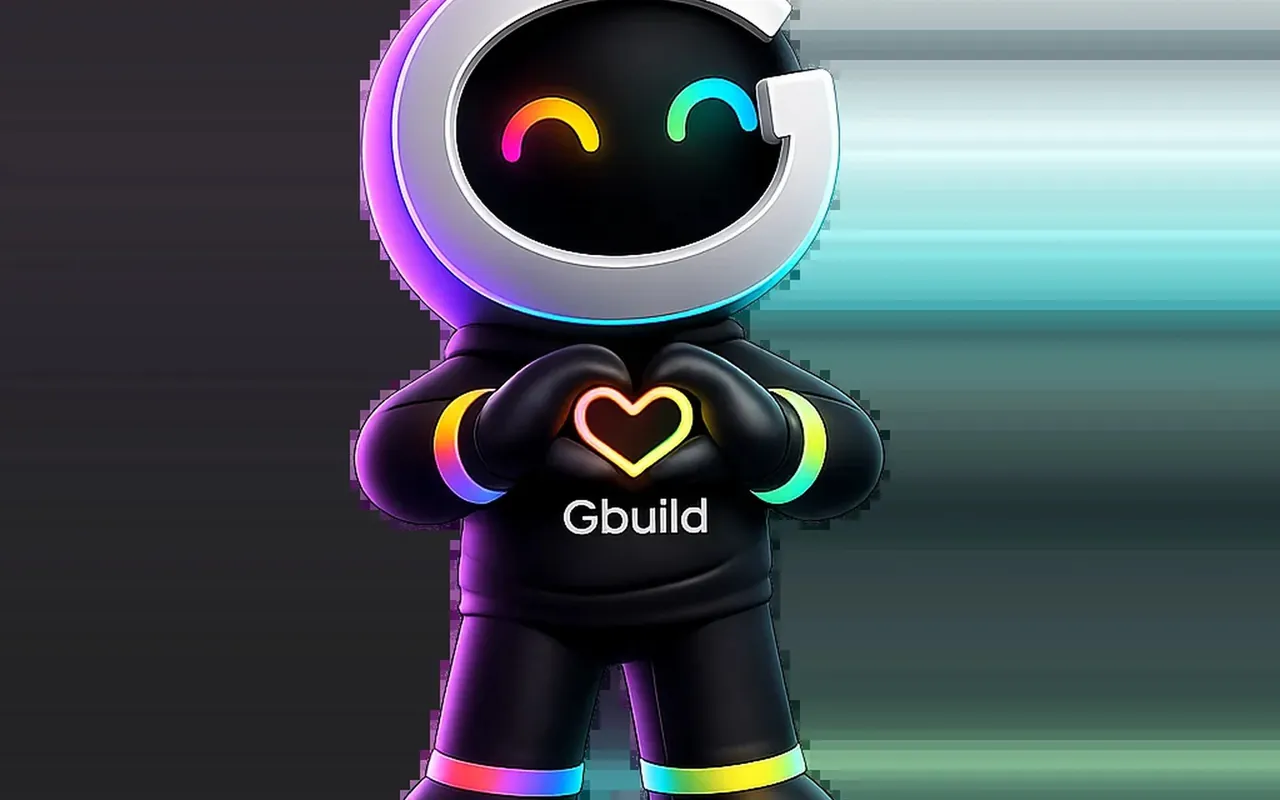
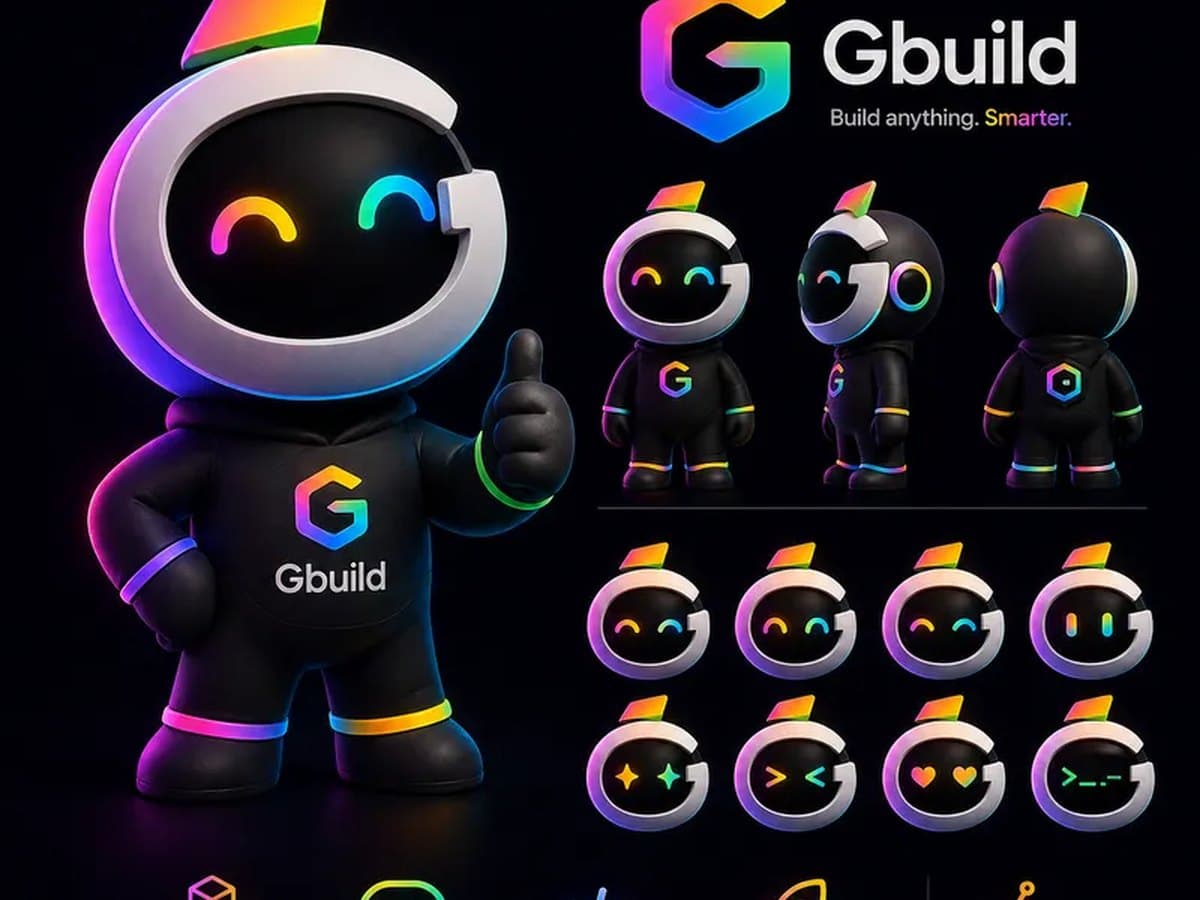
A macOS desktop app that orchestrates a fleet of AI coding agents through 5 first-party drivers (Claude Code, OpenClaw, Hermes, Codex, shell + sandboxed bring-your-own) from one calm, voice-first interface. One shell: Lattice, a voice-first command bar whose power surfaces (Mission Control, AI Video Studio, ThingStore) ship as native Apps inside it; the legacy second shell was deleted in a 26,000-line single-shell consolidation. Electron plus a Rust sidecar over JSON-RPC (916 registered methods), an on-device voice pipeline (MLX Whisper STT, Kokoro TTS, Gemini Live realtime), a fully local Qwen3 RAG layer, bidirectional Obsidian sync, full MCP lifecycle management, and the "G" mascot. 6,308 commits and 275 notarized releases in its first 81 days. Its research arm, the Semiochemical Context Layer, compresses agent protocols into roughly 1-token pheromone codes. Marketing site live at gbuild.app; the desktop app is in private development.

6,308 commits in 81 days275 notarized releases916 RPC methods
Currently Building

Voice Agents

An operating system you can talk to.

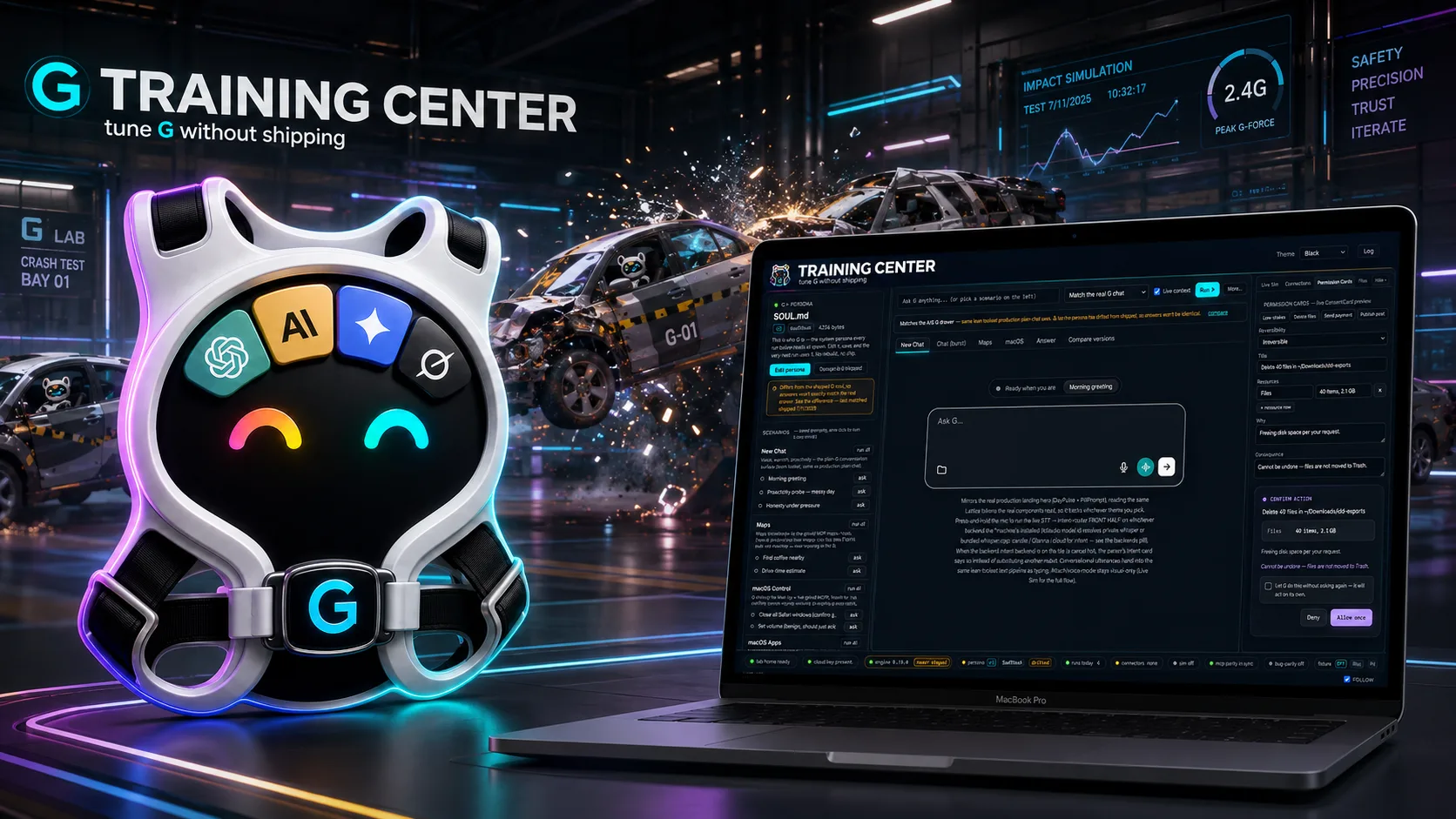
GBuild's voice layer: dictation, conversational, and realtime modes over OpenAI Realtime and Gemini Live (3.1 Flash Live), with on-device MLX Whisper STT and Kokoro TTS. An intent router turns speech into tool calls that operate macOS apps, files, and folders, GBuild itself, and the agent fleet, behind destructive-intent confirmation and transcript redaction. Trained in a custom Voice Harness Lab where per-turn human feedback on real conversations becomes an approved patch to the harness source, plus a training center of scripted voice skits and router benchmarks. A proactive agent completes a PRD and CRM records live from a running conversation; phone-calling agents are deployed internally in a test environment.

Dictation / conversational / realtimeVoice Harness Lab + training centerPhone agents in internal test
Traced to the source repo

Evidence, not adjectives

Eval design, MCP lifecycle, cost routing, orchestration, each carried by a number you can check against the repo, including the one that made a model look worse.

Eval design
97.5 → 62%

The overfit my hand-labeled gold set caught before a model could ship. Publishing the failure is the point.

MCP lifecycle
40 methods

Catalog, PKCE OAuth, sandbox isolation, signed bundles. GBuild manages the protocol, it does not just call it.

Cost routing
Local-first

On-device voice and RAG, cloud only where it earns. One routing map, enforced at commit time.

Orchestration
5 drivers

A fleet of live agents, tiered fan-out, every terminal with a guaranteed shutdown path. Knowing when not to spawn.

Portfolio

Major Projects

24 projects across mobile, web, AI, and automation

GBuild

Currently Building

Build anything. Smarter.

A macOS desktop app that orchestrates a fleet of AI coding agents through 5 first-party drivers (Claude Code, OpenClaw, Hermes, Codex, shell + sandboxed bring-your-own) from one calm, voice-first interface. One shell: Lattice, a voice-first command bar whose power surfaces (Mission Control, AI Video Studio, ThingStore) ship as native Apps inside it; the legacy second shell was deleted in a 26,000-line single-shell consolidation. Electron plus a Rust sidecar over JSON-RPC (916 registered methods), an on-device voice pipeline (MLX Whisper STT, Kokoro TTS, Gemini Live realtime), a fully local Qwen3 RAG layer, bidirectional Obsidian sync, full MCP lifecycle management, and the "G" mascot. 6,308 commits and 275 notarized releases in its first 81 days. Its research arm, the Semiochemical Context Layer, compresses agent protocols into roughly 1-token pheromone codes. Marketing site live at gbuild.app; the desktop app is in private development.

6,308 commits in 81 days275 notarized releases916 RPC methods
ElectronRustReactNext.jsxterm.js

Voice Agents

Currently Building

An operating system you can talk to.

GBuild's voice layer: dictation, conversational, and realtime modes over OpenAI Realtime and Gemini Live (3.1 Flash Live), with on-device MLX Whisper STT and Kokoro TTS. An intent router turns speech into tool calls that operate macOS apps, files, and folders, GBuild itself, and the agent fleet, behind destructive-intent confirmation and transcript redaction. Trained in a custom Voice Harness Lab where per-turn human feedback on real conversations becomes an approved patch to the harness source, plus a training center of scripted voice skits and router benchmarks. A proactive agent completes a PRD and CRM records live from a running conversation; phone-calling agents are deployed internally in a test environment.

Dictation / conversational / realtimeVoice Harness Lab + training centerPhone agents in internal test
OpenAI RealtimeGemini LiveMLX WhisperKokoro TTSTelnyxRust

ThingStore

Currently Building

A marketplace that verifies before it trusts.

A signed, sandboxed app marketplace for AI-built software, inside GBuild. Every publish clears a 5-layer automated gate (manifest schema validation, secret/PII scan, capability-ceiling lint, static CSP analysis, LLM risk review) plus egress-allowlist scrutiny; every install verifies an Ed25519 publisher signature over a SHA-256 content hash before a byte runs. Installed apps live in their own Electron session partition with deny-by-default permissions, and their only network path is a loopback CONNECT broker that resolves DNS internally to block rebinding. Revocation holds even offline. Supply-chain security for an app store, built solo.

5-layer publish gateEd25519 + SHA-256 verify chainRevocation holds offline
Cloudflare WorkersRustTypeScriptEd25519 / WebCryptoR2

The Foundry

Currently Building

Models that earn their way into the product.

GBuild's on-device model line. ModernBERT/DeBERTa encoder classifiers fine-tuned on synthetic data generated by typed-field corruption (so the training data costs nothing), evaluated against human-labeled gold sets, and promoted only past a paired-bootstrap 95% LCB significance bar with a champion/challenger harness. The first shipped model is a Rust runtime contact ranker with a versioned feature contract to its Python trainer and a Spearman rank-correlation gate. The keystone grounding verifier scored 97.5% on its own synthetic holdout and 62% on the gold set, a 35-point overfit the gates caught, published rather than hidden.

Paired-bootstrap 95% LCB gatesSynthetic data at $0 marginal97.5→62% overfit caught
PythonModernBERT / DeBERTaRustPyTorch

ThingMaker

Currently Building

From conversation to shipped app.

The no-code on-ramp inside GBuild: a conversational interview (greeting → discover → suggest → stage → cherry-pick → cross-check → review → produce) that turns "what do you want to make" into a live PRD plus five supporting docs, persisted atomically, then hands off to a builder agent seeded with the export. The interview happens in a React-Three-Fiber 3D room with four interviewer personas, mode-choreographed cameras, and a WebGL/WebGPU backend selector.

8-phase interview state machine6 auto-generated design docs3D authoring room
RustReact Three FiberTypeScriptThree.js

GBuild Cloud

Currently Building

The edge backend behind the desktop.

A 14-Worker Cloudflare service mesh behind one API gateway: passwordless magic-link identity with 4-provider OAuth2 + PKCE built from primitives, a key-custody LLM proxy with tier-aware daily dollar ceilings, queue-metered usage accounting into Postgres, Durable Object WebSocket hubs, SMS/voice telephony over Telnyx with Ed25519-verified webhooks, crash and telemetry sinks on R2, and an autonomy engine governed by off-switches, cooldowns, and circuit breakers. Zero-hop Service Bindings between Workers; workers.dev bypass disabled as a security control.

14 Workers in repoService Bindings, zero-hopSpend ceilings at the edge
Cloudflare WorkersDurable ObjectsQueuesKVR2TypeScript

Semiochemical Context Layer

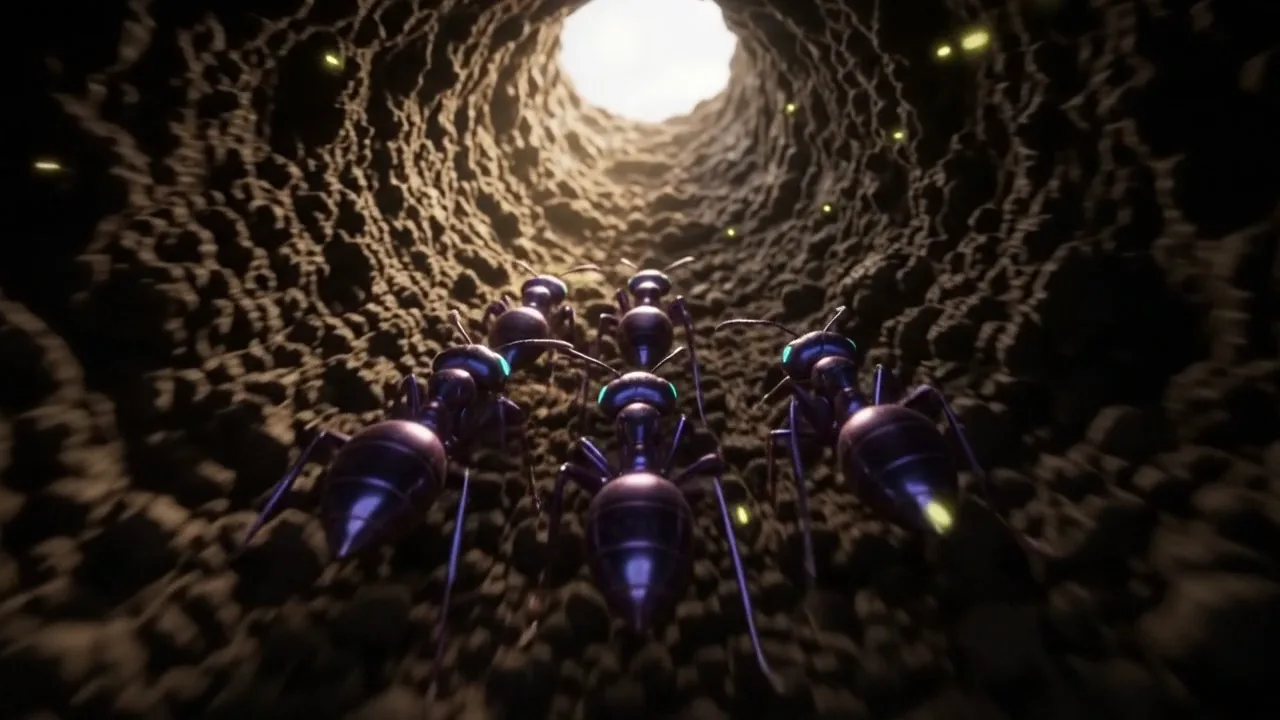
Pheromones, taught to AI agents.

The research arm of GBuild. A pheromone-inspired language that lets an AI agent decode a 1-token code into a full behavioral protocol, the way an ant's antenna turns one molecule into a fixed action. Three inventions (PHEROCODE, STIGFIELD, KAIROGRADIENT) over one shared decoder, the Antenna, held to a lab that measures a compression x fidelity frontier instead of a headline. Research v0.1: honest about where decoding holds and where it breaks, with live wiring into GBuild a deliberate next step.

79×–145× per-signal density535-token Antenna, paid once4/12 codes hold ≥0.8
LLM AgentsResearchGBuildStigmergyClaude

PrayerMap

Making the Invisible, Visible.

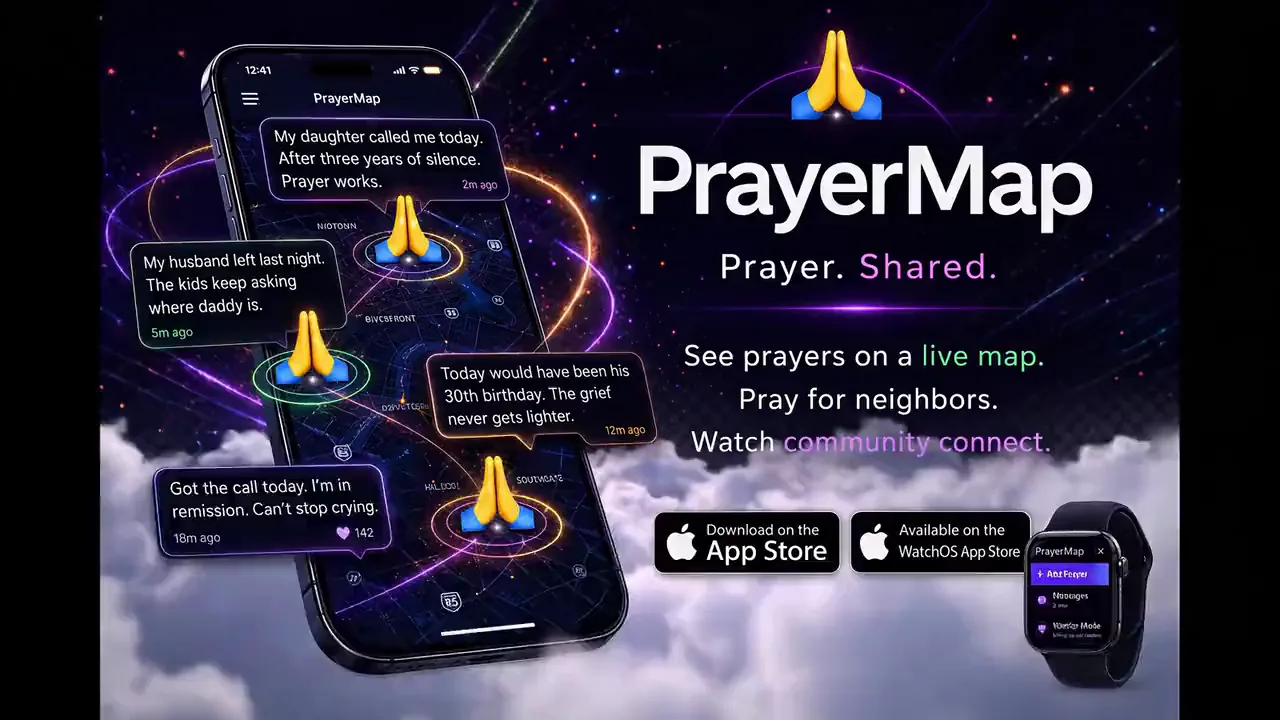
A full-stack mobile app connecting communities through interactive, real-time prayer mapping. Features a 6-dashboard command center with AI behavior monitoring, CRM pipeline, and RAG training controls.

46 edge functions198 migrations6 dashboards
React NativeExpoSupabaseMapbox

Puber

Currently Building

Built for the long miles.

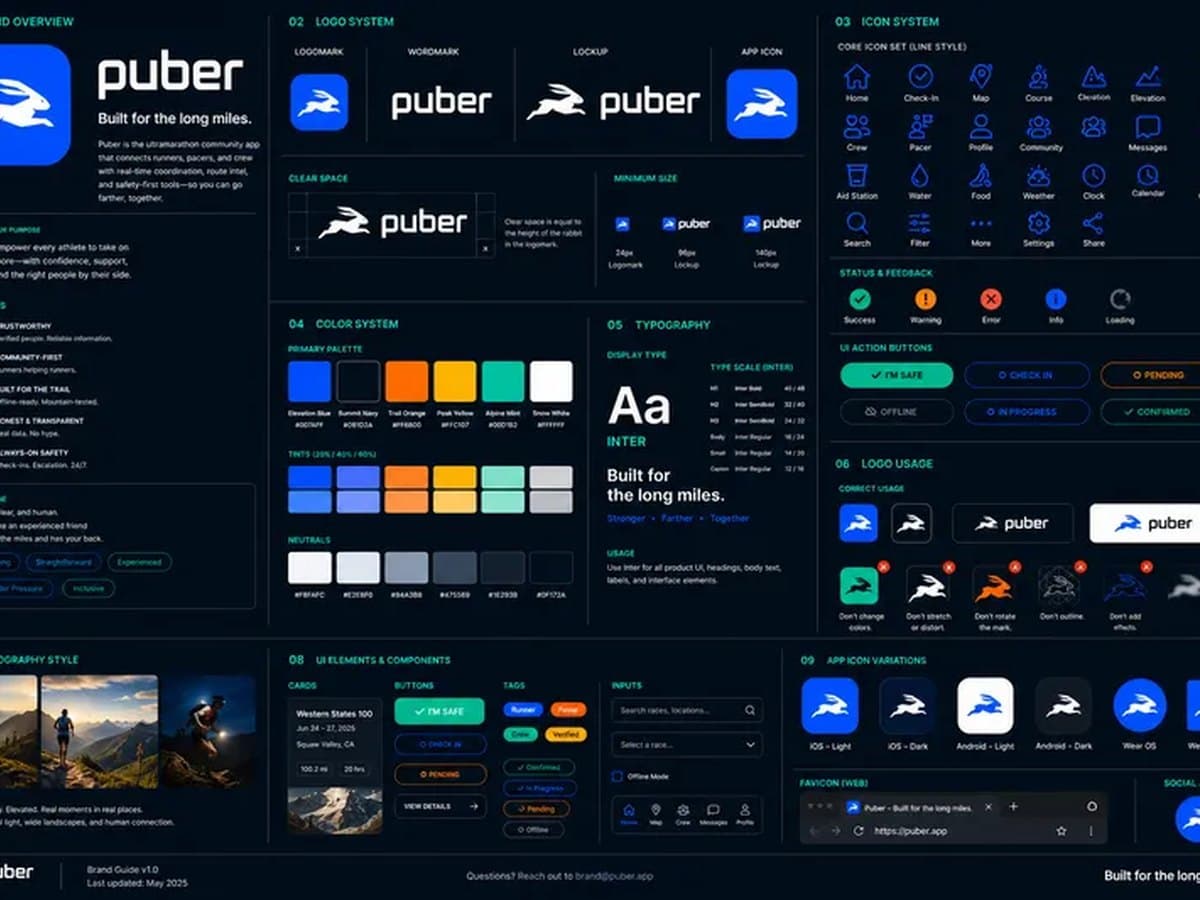
An ultramarathon support app connecting 100-mile trail runners with pacers and crew, plus a per-race coordination board for rides, lodging, drop bags, and last-minute replacements. Expo + Supabase + a Next.js ops console: 25 migrations with RLS on every table, 14 edge functions, a Postgres match state machine, an offline Race Kit, and safety designed in as architecture. Built end to end and running locally; not yet deployed. Target: iOS + Android for the 2026 100-mile season.

25 migrations14 edge functionsiOS + Android target
ExpoReact NativeSupabaseMapboxNext.js

Johnson Power Rankings

Currently Building

A world ranking for the 200+ mile ultra.

A data-driven, weekly world ranking system for ultramarathon runners, launching with the 200+ mile tier. A pure-TypeScript engine (course-difficulty model, iterative field strength, time-decayed weighted-mean ratings, backyard scoring) over a Supabase backend with 11 migrations, RLS on 20+ tables, 6 edge functions, and a Monday recompute cron. A Next.js web app, a separate admin panel, and an Expo mobile app. Built with my dad as the domain expert. Live in preview; public launch pending.

Pure-TS rating engine11 migrationsLive in preview
Next.jsSupabaseExpoTypeScript

Claude Code Toolkit

Production infrastructure for AI agents.

An open-source infrastructure layer for Claude Code with 13 interactive skills, 7 specialized agents, a Smart MCP Loader that auto-enables servers via NLP scoring, and 48 scaffolding templates. Built entirely with Claude Code.

13 skills7 agentsSmart MCP Loader
Node.jsClaude CodeMCP ProtocolChromaDB
GitHub

Neurotoken

Adaptive thinking allocation.

A zero-dependency prompt scoring engine that classifies every Claude Code prompt on a complexity × stakes matrix, recommending one of 11 model/effort tiers from haiku/low to opus/max. Adversarial-tested with 183 passing tests.

183 tests11-tier matrix<100ms scoring
Node.jsESMClaude Code HooksZero Dependencies
GitHub

Directors Chair

Mission control for an autonomous agent fleet.

A real-time mission control dashboard monitoring an autonomous agent fleet across job search, project maintenance, and infrastructure.

12 agents integratedBuilt on Mother HenLive and running
Next.jsSupabaseQdrantClaude API

Mother Hen

Mission control framework.

The underlying framework powering Directors Chair. Provides agent lifecycle management, pipeline orchestration, persistent state, and multi-operator support. Built with Next.js, Supabase, Qdrant, and Discord. Private beta, with open-source release planned.

Private betaFramework layerOSS planned
Next.jsSupabaseQdrantDiscord

LivCut

Privacy-first video editing.

A professional video editor built with Swift, Metal, and CoreML: 66 Metal compute kernels and 11 on-device AI engines. All AI processing runs locally on the Apple Neural Engine.

66 Metal kernels11 AI enginesFully on-device
SwiftMetalCoreMLAVFoundationVideoToolbox

Challenge Cup

Ryder Cup for your crew.

A multi-platform golf tournament app with AI-powered caddie, ESPN-style broadcast leaderboards, and format-per-segment flexibility. Built for Apple Watch, Garmin, and mobile.

Apple Watch appGarmin Connect IQAI caddie
React NativeSwiftUIGarmin Monkey CAWS Amplify

Living Earth

The planet, alive.

A WebGPU-powered globe visualization rendering live aircraft, satellites, ships, weather, and prayer energy at 60fps. GPU-computed boid flocks and particle simulations on mobile via react-native-wgpu.

20K live aircraft14K satellitesGPU boid sims
WebGPUThree.jsTypeGPUreact-native-wgpu

MCP-WP

AI Meets WordPress.

A LangGraph-based architectural prototype for multi-agent WordPress analysis. Orchestration harness and realtime Cursor-to-Pinecone sync are live; 27 agent personas defined in Postgres.

27 agent personas7 LangGraph agent typesPinecone vector retrieval
PythonLangGraphMCP ProtocolFastAPI

Ora

Multi-agent orchestration, extracted from production.

An AI orchestration framework extracted from the production MCP-WP system. Coordinates Claude Code, Cursor, GitHub, Pinecone, LangSmith, and Slack into a unified development pipeline with file-based agent coordination.

Multi-tool orchestrationFile-based agent coordinationExtracted from production MCP-WP
ShellClaude APIPineconeMCP

InkProof

Print preflight for Canva.

A Canva app that catches print production issues before they cost money. Checks safe zones, image resolution, CMYK safety, and dimensions. Built and submitted to the Canva Marketplace; currently under review.

Zero data collection4 check typesClient-side only
Canva Apps SDKTypeScriptPrint Production

Rapid Studio

AI-Powered Creation.

A GPU fleet orchestrator for rapid AI content generation. Microservices architecture with FastAPI orchestrator, Redis queue, and RunPod GPU workers generating images in under 1 second.

<1s generationGPU fleetMicroservices
PythonFastAPIRunPodSDXL-Turbo

n8n Media Workflow

Autonomous content engine.

An autonomous Instagram content system that analyzes accounts, extracts style patterns, generates brand-aware content at 5 posts/hour, and learns from human feedback via Slack.

5 posts/hourGPT-4V analysisFeedback learning
n8nGPT-4VDALL-E 3Supabase

MeetingCost

See what meetings really cost.

A macOS menu bar app that tracks the live dollar cost of any meeting. Swift 6 + SwiftUI, StoreKit 2 IAP, App Sandbox, zero network. Built end-to-end by a Claude Code app-builder agent from a SPEC.md file, 11 days from scaffold to the Mac App Store.

11 days to live1 commitFree + $2.99 IAP
Swift 6SwiftUIStoreKit 2XcodeGenClaude Code
Mac App Store

PasteDrop

Smart clipboard transforms.

A macOS menu bar app that detects what you copy, JSON, URLs, hex colors, emails, code, UUIDs, and offers one-click transformations tailored to that content type. Native, fully offline, Keychain-sandboxed.

8 content types$4.99Fully offline
Swift 6SwiftUIMenuBarExtraApp Sandbox
Mac App Store

I'm aFull-stack engineer,
shipping iterative agent systems.

I build multi-agent systems for my own work, then extract the reusable patterns into open-source tooling and shipped products. The flagship is GBuild, a macOS AI build environment with a Rust core and a Cloudflare edge backend; around it sits shipped work across mobile, web, and native platforms, all held together by orchestration infrastructure that survives real constraints.

Command Deck · Actual Screen Recordings

Mac Mini 1 · OpenClaw
Mac Mini 2 · Hermes Agent

My workstation ships front end + back end, iterates, improves, and keeps shipping. Human agency + AI for the win. I put in serious work to make sure my training on new AI tools is ahead of the pack.

I'm a design-driven full-stack engineer working on AI agent orchestration, building production systems across mobile, web, and native Apple & Android platforms. My work focuses on two outcomes: shipping polished user experiences for real people, and removing the coordination overhead that slows delivery, by designing orchestration, hooks, memory, and automation that make development compound over time.

The design comes first. I work in Figma, define a visual language and motion system, then translate that into production code. PrayerMap was born this way: the "Ethereal Glass" design system shipped as a formal handoff package in November 2025, translated into a React web app, then migrated to React Native with a 470-line animation preservation spec. See the design case study.

The last year has been dominated by GBuild (codename Mother): a notarized macOS build environment that orchestrates a fleet of AI coding agents from one voice-first shell. It made Rust my daily second language (a sidecar registering hundreds of JSON-RPC methods) and pulled in a Cloudflare edge backend, a signed app marketplace with its own supply-chain security, and an on-device model line evaluated against hand-labeled gold sets. Before that came PrayerMap: a real-time, map-based prayer platform built with React Native and Expo, backed by a Supabase/Postgres stack and a six-dashboard operations command center. In parallel, I’ve open-sourced infrastructure like Neurotoken, a test-backed prompt scoring engine that runs in Claude Code hooks, along with tooling patterns that keep multi-agent work reliable rather than chaotic.

Before software, I worked in institutional finance and later operated businesses. That experience shaped how I build: clarify risk, instrument reality, respect users, and ship with discipline. Today I'm based in the Phoenix area, and open to full-time roles, contract work, and high-signal collaborations.

Workflow

The Orchestration Layer

How I build with AI-accelerated workflows

User Intent

Natural-language requirement or idea

AI Director

Ora orchestrates agents & context

Claude Code + Cursor

Parallel implementation agents

GitHub

Automated commits & CI pipeline

Deployed

Live in production, human-approved

ora-terminal
$ ora init --project portfolio-site
[director] Analyzing project requirements...
[director] Spawning agent: claude-code (architecture)
[director] Spawning agent: cursor (implementation)
[claude-code] Generating component architecture...
[cursor] Writing 12 components in parallel...
[github] Committing changes: feat(hero): add 3D particle background
[deploy] Building... ████████████████ 100%
[deploy] Live at https://87n1.com ✓

Live Production

n8n Automation Workflows

Real production workflows running on n8n Cloud. Each graph below is built from live workflow data: click to expand and explore the node topology.

29

Workflows

14

Active

261

Total Nodes

6

Integrations

Integrations:SlackGitHubClaudeChatGPTSupabaseInstagram

The Orchestration Layer

Designing complex multi-agent workflows where AI agents coordinate, reason, and execute in parallel, with tools, memory, and feedback loops.

A director routes intent to specialist agents across parallel lanes, with review loops feeding back

AI Constellation

The assembly line changed manufacturing. AI agent pipelines are the next one, 16 technologies in orbit, everything connected.

Powered by AI · Hover a node to explore

Close to home

Some of this is family

Two of the things I'm building right now came out of the same world: the ultramarathon one. My dad, Paul, is an ultrarunner, a pacer, and a crew member. He knows the runners by name, the courses by feel, and the culture from the inside. Five consecutive Cocodona 250 finishes, a 1,000-mile buckle, and the Arizona Monster 300.

Johnson Power Rankings started at the kitchen table, on a recording: Dad as the domain expert, me on the stack. There's no credible data-driven ranking for the 200-plus-mile races, so we built one. The name is the family name, on purpose.

Puber is the other side of it: an app that connects 100-mile runners with the pacers and crew who get them through the night, plus a per-race board for everything that falls apart at the last minute. It is built end to end. It is not shipped yet, and I'm saying so.

He doesn't run alone. My mom crews every race. My nieces and nephew train at IMG Academy. The whole house leans into hard things.

Family and friends at the Cocodona 250 finish line, with Paul James Johnson in the center
Cocodona 250 finish line, 2026
Jeffrey Michael Johnson | AI Engineer & Agent Orchestration